Field Notes
VanishingZhongliao Village
7/4 — Zhongliao Village
This was my first real contact with the Li people. I dropped my bags at the hotel and went straight to Zhongliao, a small village outside Sanya.
It was not what I expected.
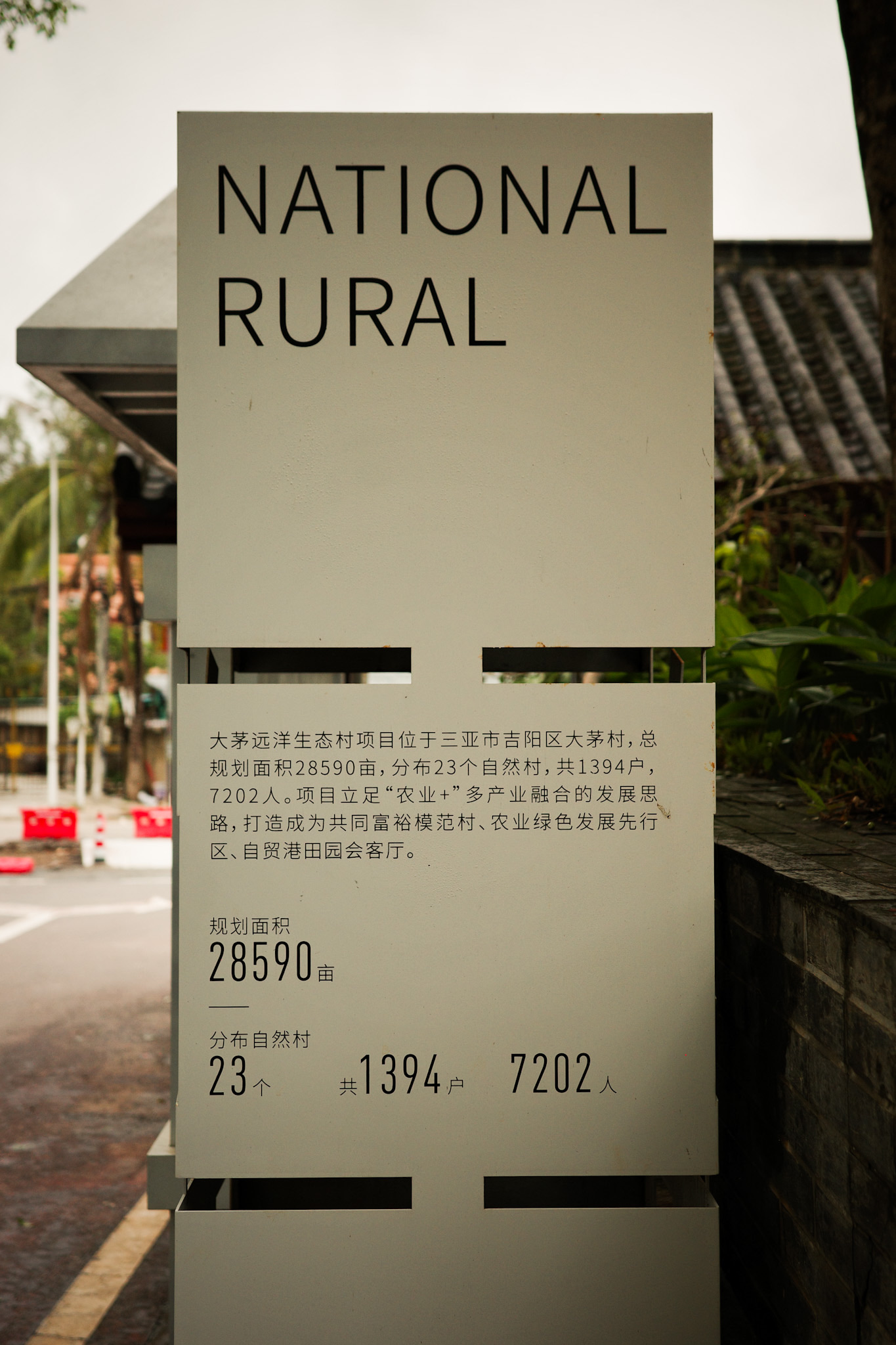
I had done my research. Zhongliao is Sanya’s first “five-star” model village, a government showcase project combining homestays, intangible heritage, tea ceremony, incense culture, and farm-to-table tourism. But it wasn’t nearly as prosperous as the plans suggested.
Driving in, the first thing I saw was a large, unmistakable parking sign pointing toward the village, identical to the kind you see at any tourist site in China. But once I stepped out of the car, the scene made me question whether this was really a tourist destination at all. The police station’s parking lot held nothing but a few patrol cars. The road was empty of visitors. Villagers riding past on electric scooters looked at me, the outsider, with a mix of confusion and curiosity.
I stopped first at the security booth by the visitor center and asked the guard whether this was a Li village. He confirmed it was, and I walked on.
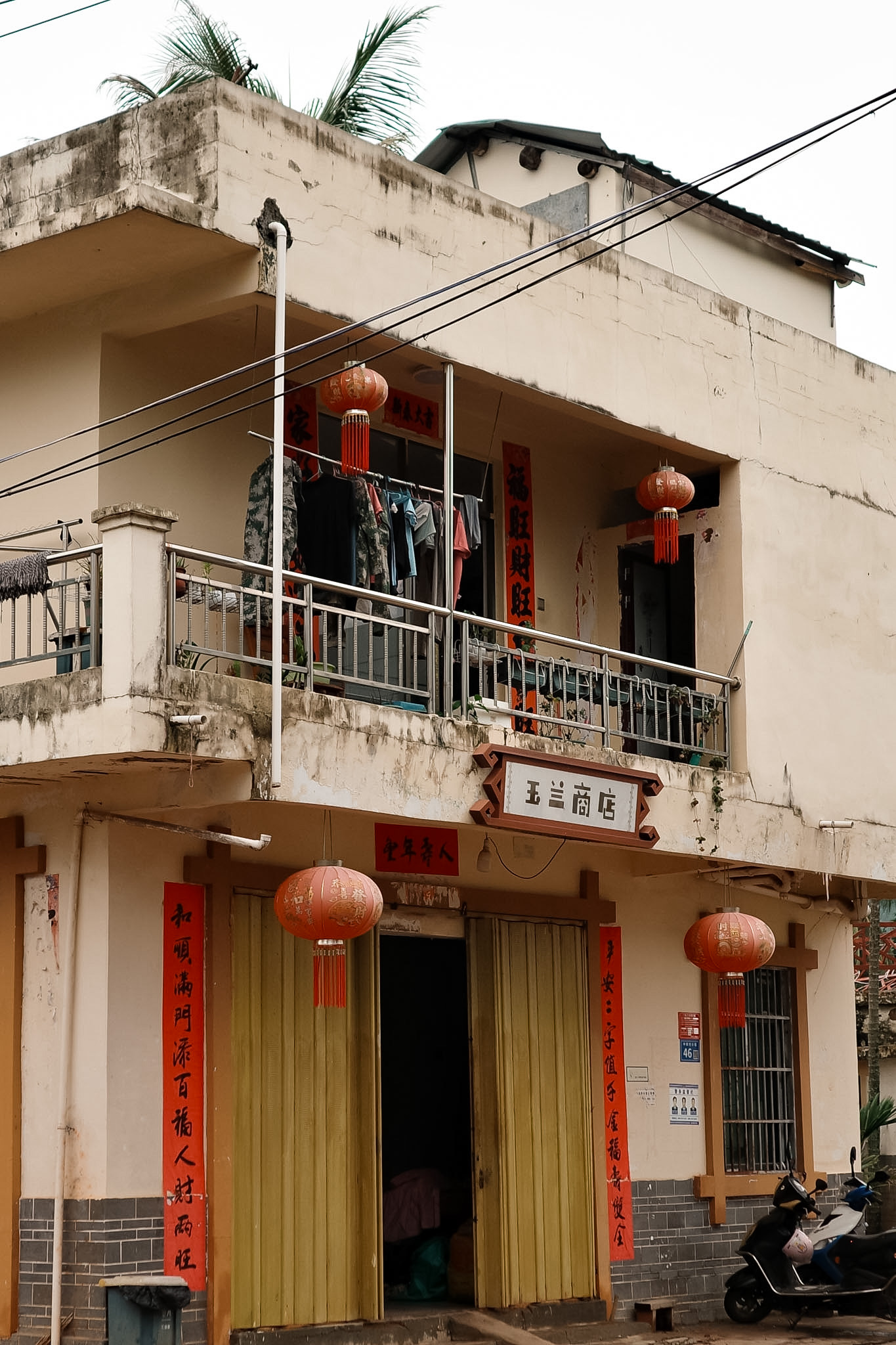
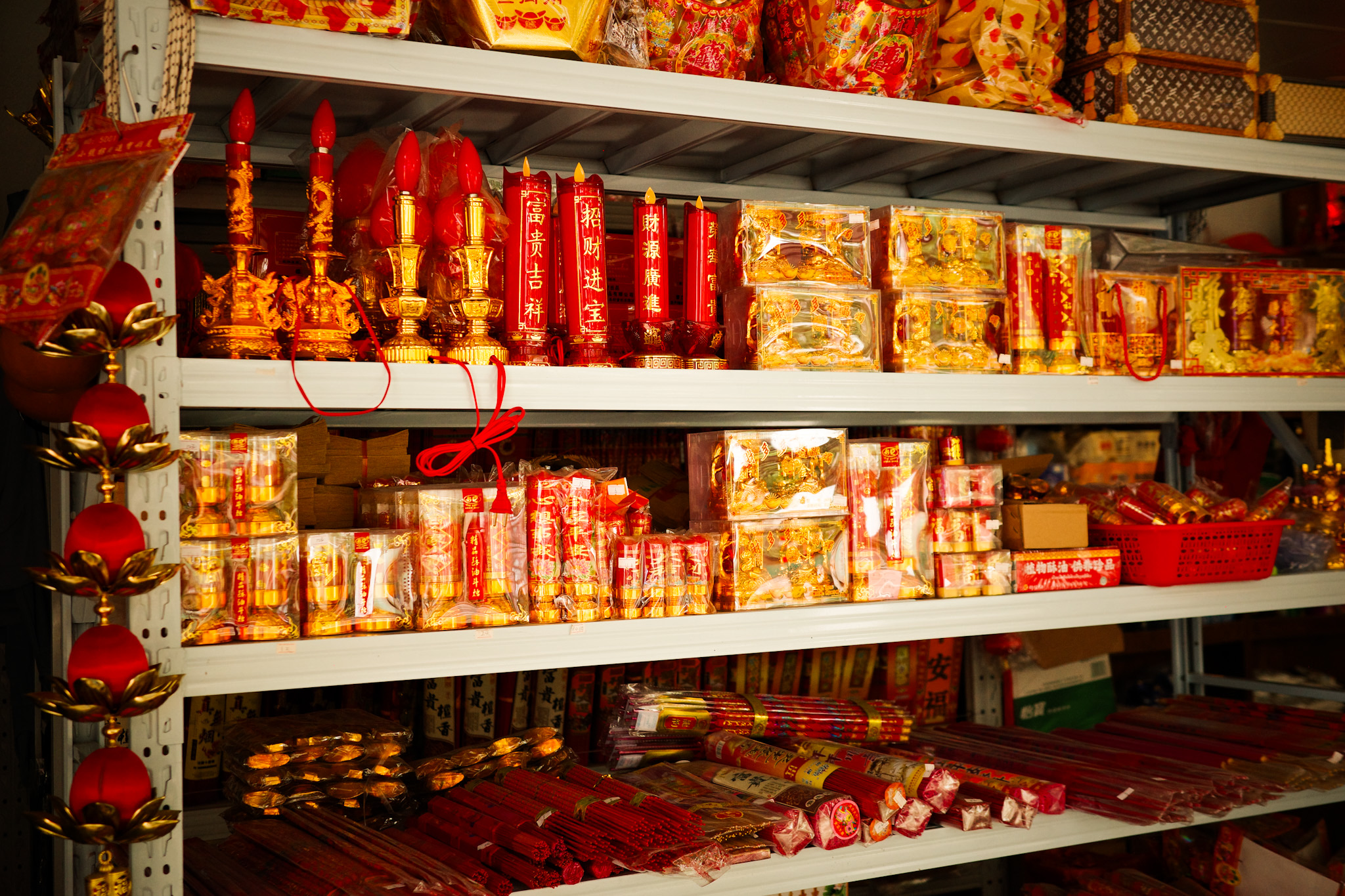
I found a small shop selling festival goods. An elderly woman sat resting in a rattan chair inside. I bought a bottle of water and started chatting with her. She had lived in the village for decades. That evening, her daughter and son-in-law, who had been working away from home, were coming back for dinner.
As we talked, a young woman walked out from a back room, dressed fashionably. She was the grandmother’s daughter. When she learned I had come from Shanghai, she brought out yangmei berries for me and told me about her time there. She was also Li, born in this village, but she never wanted to be confined to it. She left young and had worked across nearly all of China: Chengdu, Chongqing, Shanghai, Beijing, Shijiazhuang, Zhuhai. She had held jobs, started businesses, always looking for opportunity. Let’s call her Auntie.
Auntie’s niece, Yulin, was seventeen, the same age as me. She had dropped out of vocational school and was already working. She seemed shy around someone her own age, but she told me I was tall. I told her she was pretty.
After a while, Auntie’s husband came home, tall and broad-shouldered, always smiling, gentle in the way he spoke. He invited me to stay for dinner. I wanted to, but I still had the rest of the village to see, so I declined. We took a photo together before I left. Everyone was happy, except the grandmother, who did not want to be photographed.
Before leaving, I added Yulin on WeChat and sent her the photo. We talked for a while about places to eat and things to do in Sanya, and I told her about Shanghai. Talking to her, I realized that despite coming from completely different backgrounds, she was still just a seventeen-year-old girl.
After saying goodbye to this family, I kept walking deeper into the village.
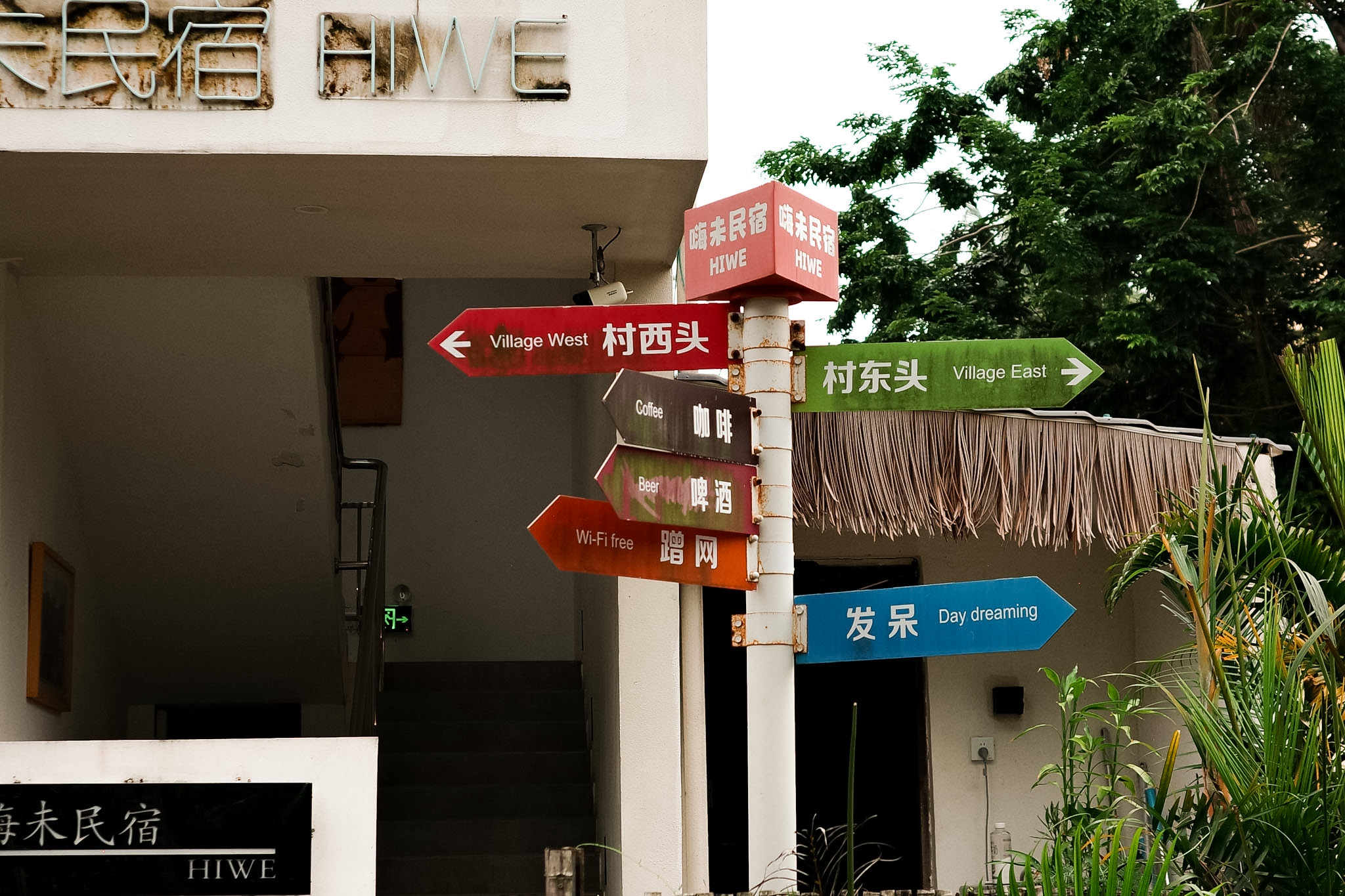
The village was quiet. Old people sat by their doors. Children were rarely seen on the streets. Signs of tourism were everywhere, even on the houses that weren’t part of it. Guesthouse plaques hung on the doors of Li villagers’ homes, but when I asked one homeowner, she told me the guesthouse had closed two years ago.
As I was leaving, her husband asked if their house was beautiful. I said yes. He told me the government had required the plaque when the “beautiful village” project began, but visitor numbers never grew, and the business eventually had to close.
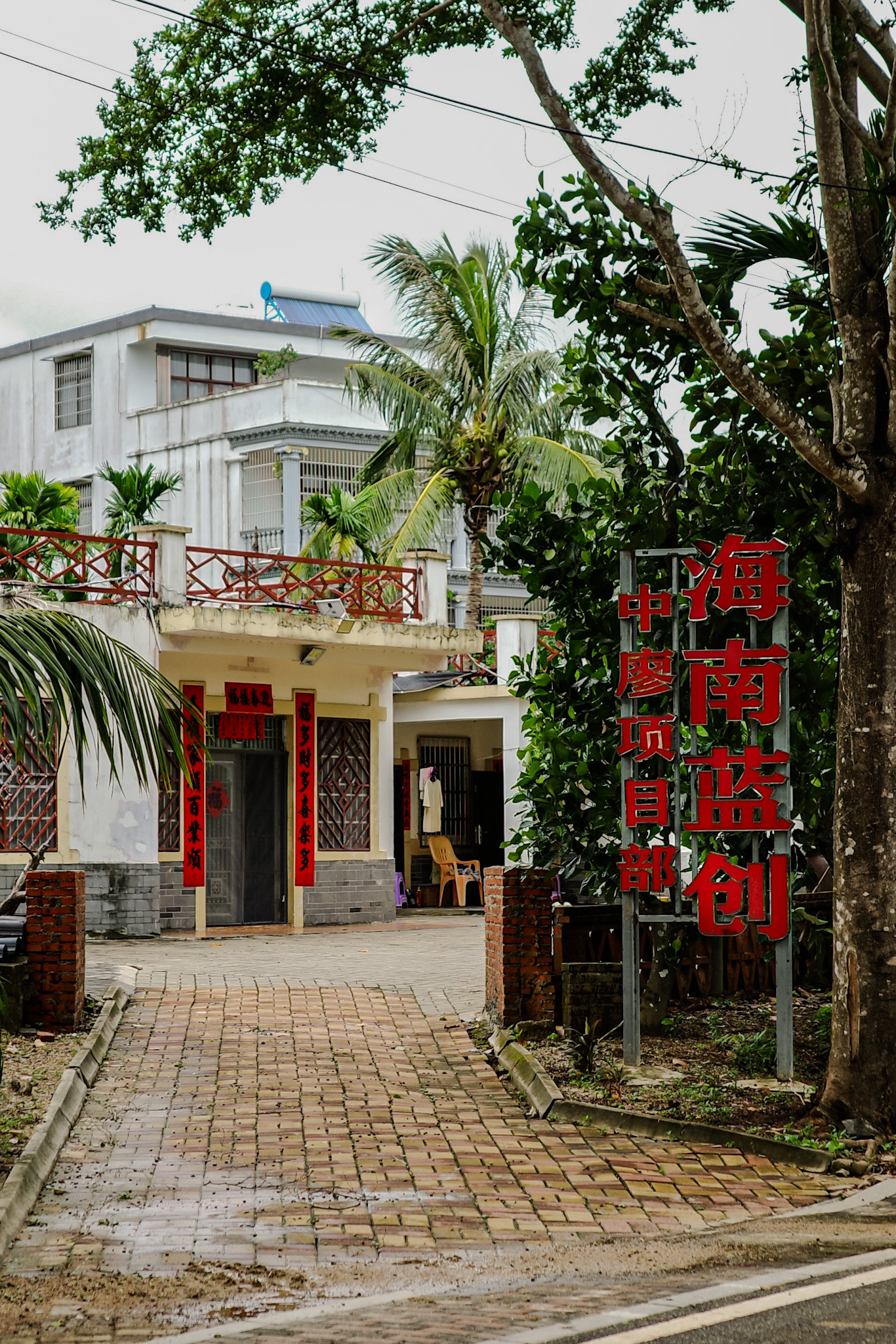
By the roadside, an elderly woman was talking with a sanitation worker in front of a field. I asked if it was her land, and she began telling me about it, and about her house across the way. She had lived in this village for as long as she could remember. When the beautiful-village project began, her house was requisitioned as the project office. The dirt road outside was paved over with brick, and a large project sign was put up at her door.
For her, this was not a good thing. After the project ended, she moved back into her own home, but the small path she once used to dry freshly harvested grain could no longer be used that way. The project sign was still standing at her door. Her expression was somber as she told me this. Projects come and go, but the people working that land remain.
Further in, a farm restaurant stood out, its decor rustic but upscale, unlike the plain single-story homes around it. The owner welcomed me warmly, sat me down by the fish pond, and showed me photos of guests grilling and fishing together during peak season. I asked if the restaurant was still operating. Surprisingly, among all the closed businesses I’d seen, this one was still standing.
The owner was not Li, and not even from Hainan. He simply loved the idea of a reclusive life in the mountains, and had opened this restaurant in Zhongliao. He told me the “beautiful village” project had helped his business enormously. I realized that depending on where you stood, Zhongliao looked like an entirely different place. He liked to travel alone, experiencing different customs and ways of life, much like me, so we exchanged contact information. He told me many stories about Li culture, and said I would love Binglanggu. This made me look forward to the next day’s visit even more.
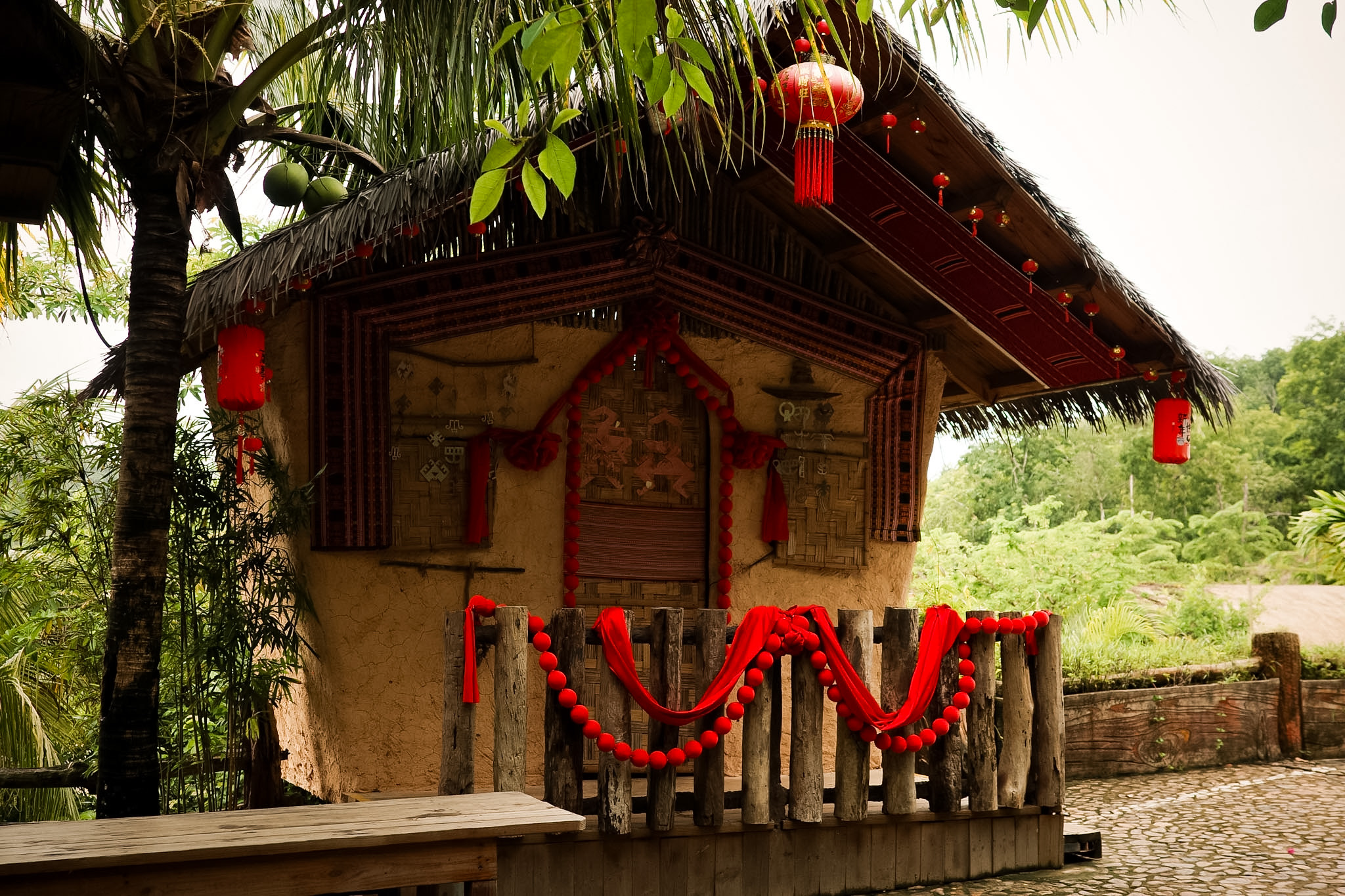
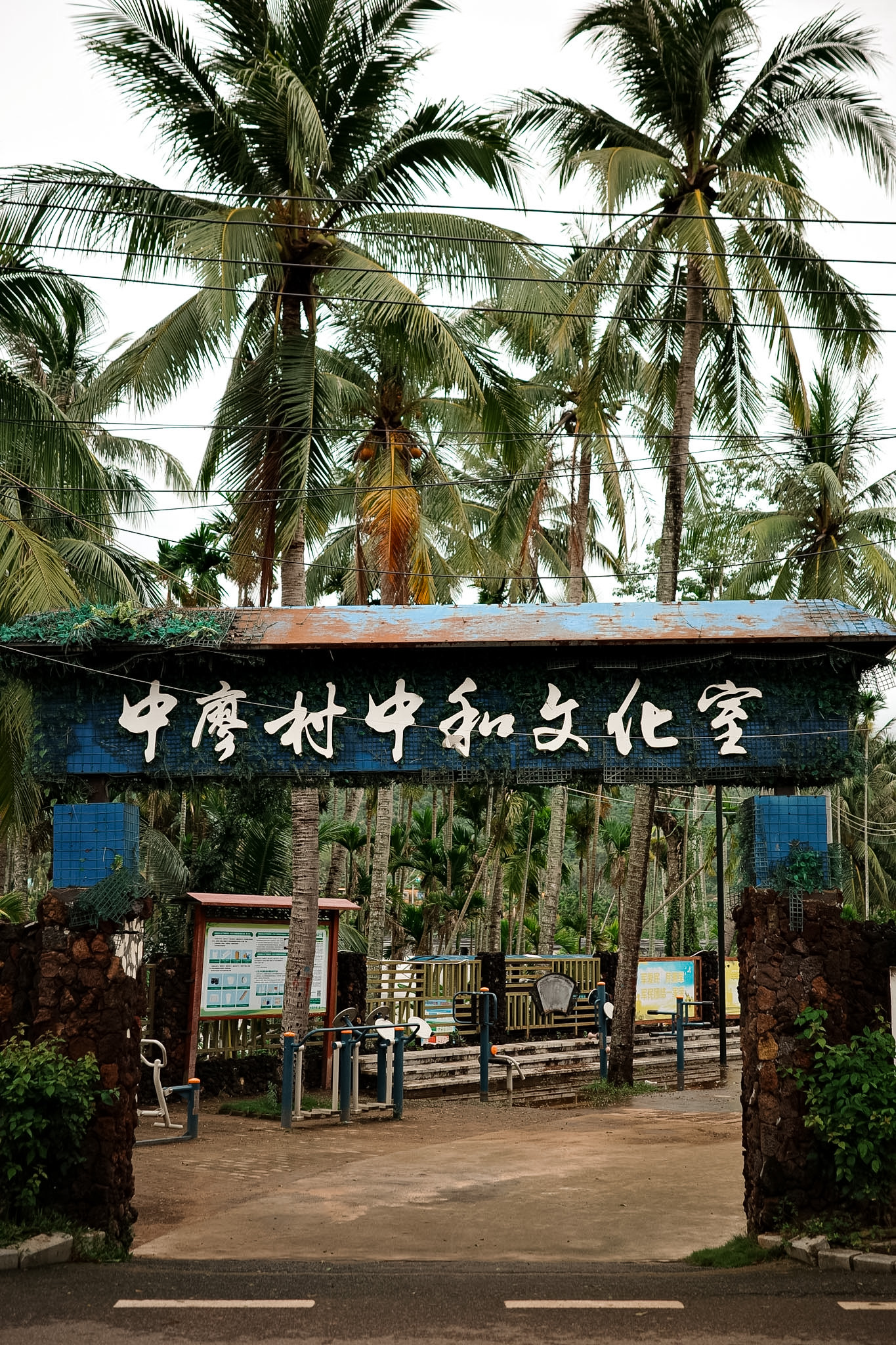
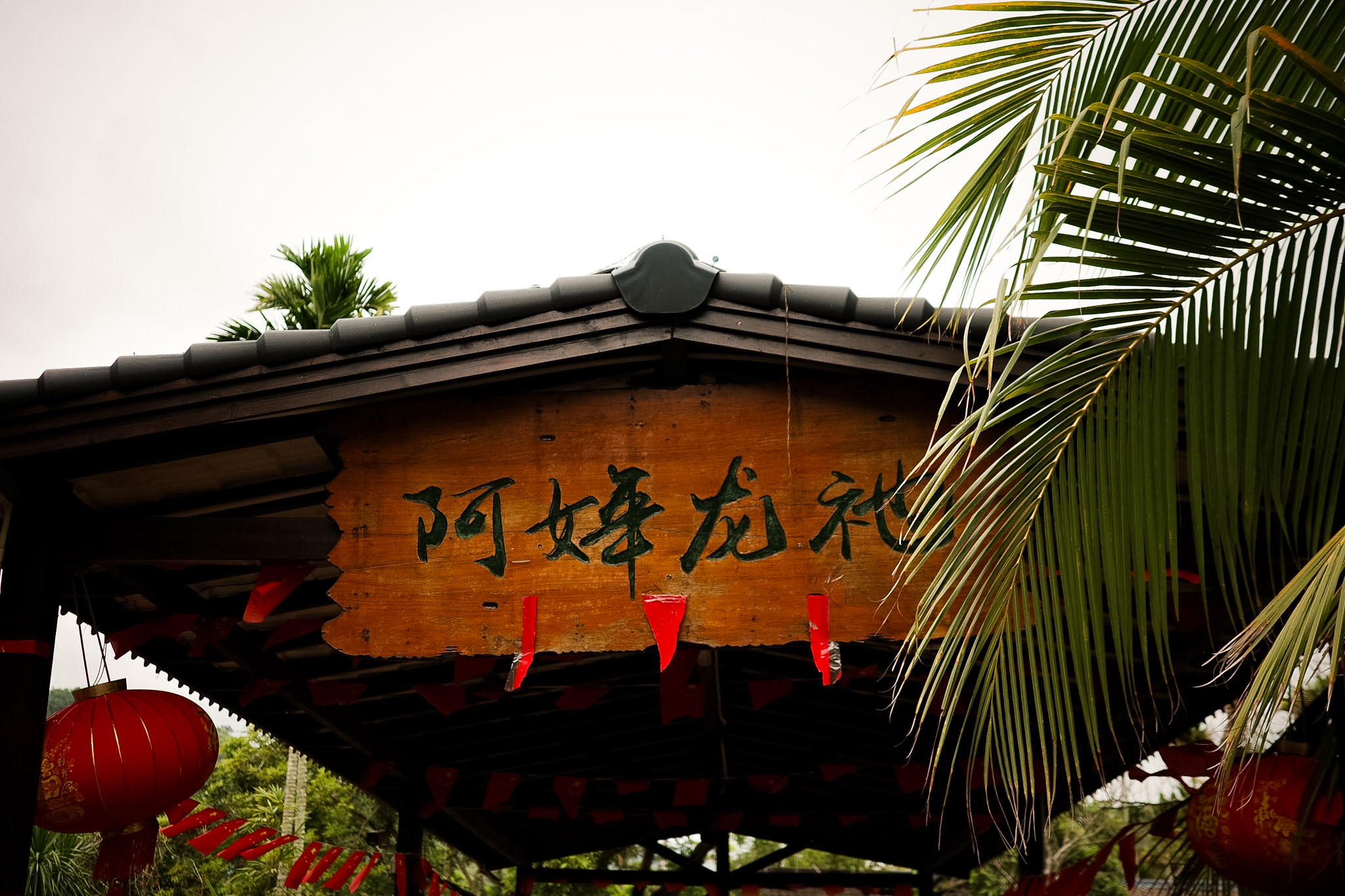
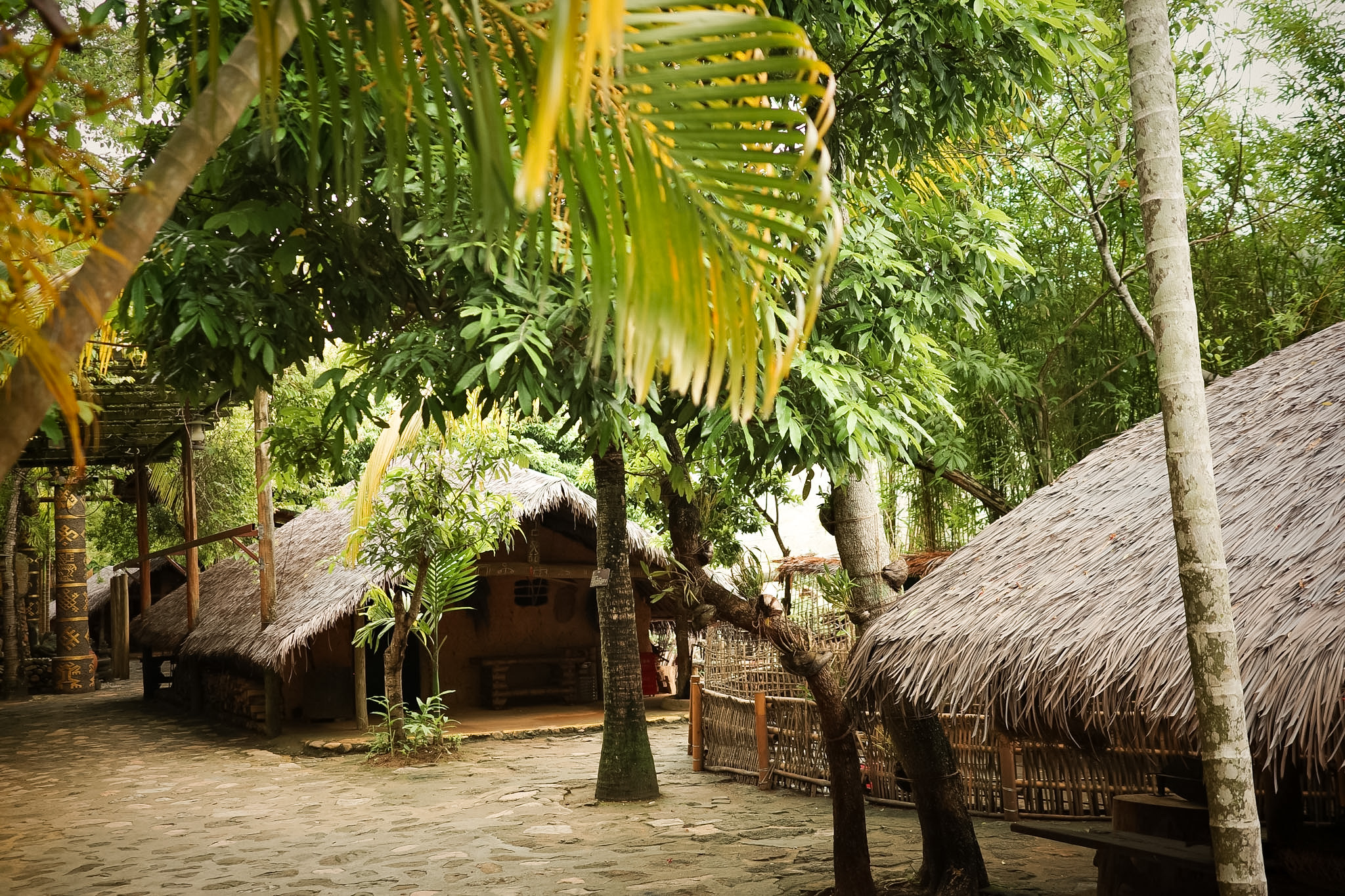
As a modernized Li village, Zhongliao has almost completely lost its traditional architecture and customs. And yet the sign at the village entrance insists that Zhongliao’s development is rooted in a deep study of cultural tradition. It made me wonder: what exactly is being protected here? Can rural revitalization and the preservation of minority culture truly coexist?